Aufruhr im Süden: Dekoloniale Ästhetiken
“There is always this feeling of discomfort when talking about these matters. An uneasiness on both sides. The same feelings, but not for the same reasons”, one of the characters in Dieudonné Niangouna’s play Nennt mich Muhammad Ali (Call me Muhammad Ali) says. In contemporary spoken-word theatre by African and Afro-diasporic authors, memories of the colonial situation is met with an outcry, and the postcolonial situation comes in for harsh criticism in consequence of violent conditions and power imbalances. The theatre stage is used here to present a rebellious uprising against racist, classist, and sexist body politics and discursive manipulation. At the same time, the dramatic texts create an aesthetic of transgression that opens up possibilities for new decolonial visions, raising questions such as: How is the postcolonial reality reflected in contemporary drama from the global south? What is articulated and reflected in these texts from the perspective of subaltern figures? What does the critical view on the western world reveal? How do playwrights create an aesthetic of rebellion and an aesthetic of transgression? And which utopian ideas come attached to it?
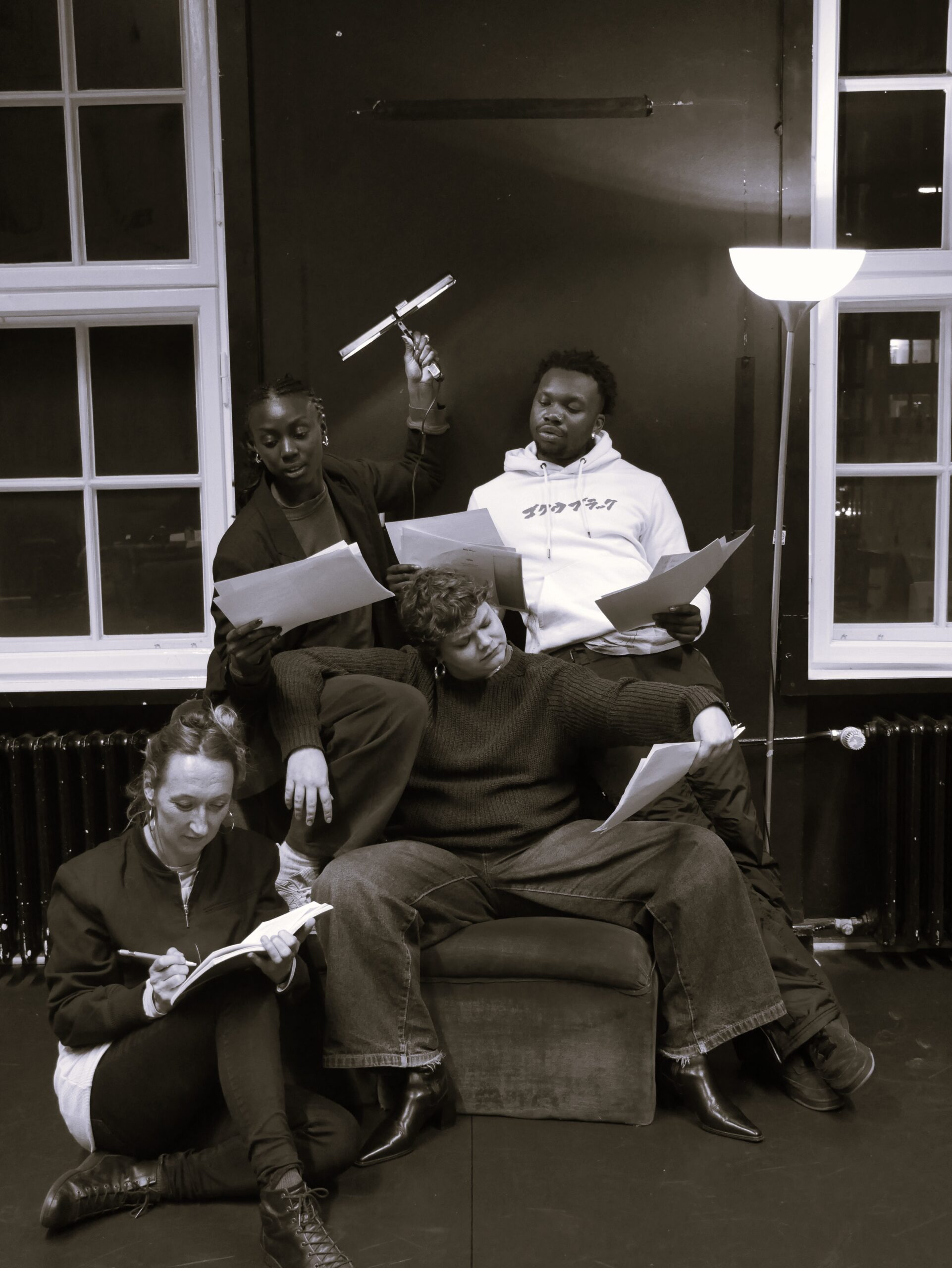
Excerpts from Dieudonné Niangouna’s Nennt mich Muhammad Ali (Call Me Muhammad Ali), Marie N’Diaye’s Hilda, and Aristide Tarnagda’s Und wenn ich Sie alle umbringe, Madame (And If I Kill You All, Madam) will be read and performed, followed by a discussion.
Grit Köppen, Vandross Diogo Valeria Alage, Rakiyat Rasheed and Luisa-Charlotta Garbe have jointly created a performance to search for clues and create a dramatic frame to explore these texts.
Based on the book: Dekoloniale Ästhetiken im zeitgenössischen Theater by Grit Köppen, 2025, published by Verlag Theater der Zeit.
Performers:
Vandross Diogo Valeria Alage
Luisa-Charlotta Garbe
Grit Köppen
Rakiyat Rasheed
