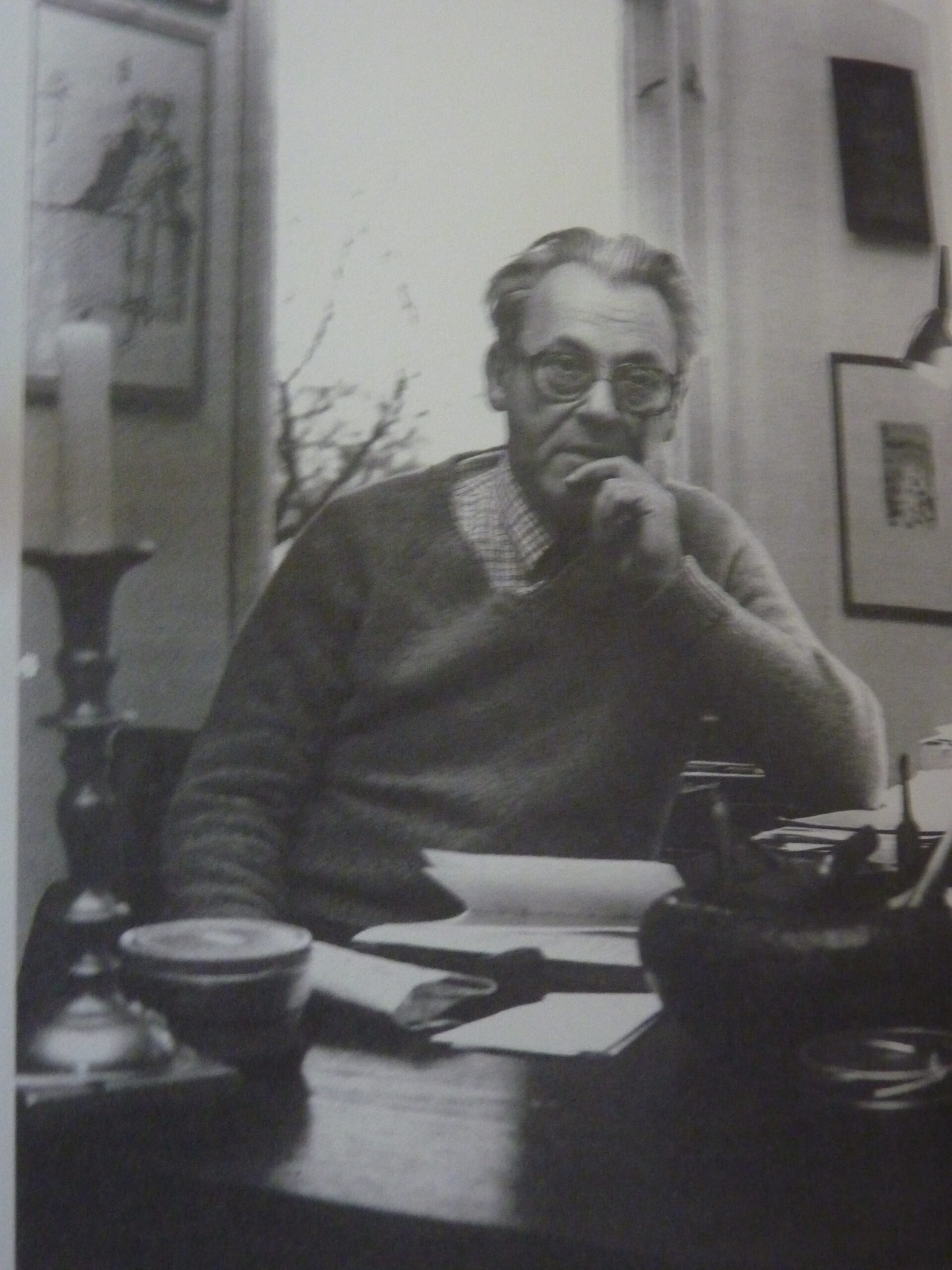
„Aufbruch in die Utopie: Für die Ewigkeit ist gar nichts.“
There are people who never disappear completely, even when their books go out of print, their old seminar rooms sit empty, and their names have been erased from official records. Wolfgang Heise is one of those thinkers whose traces endure—after decades of being buried. The philosopher, aesthetist with a socialist backbone, intellectual artist in the engine room of the GDR, was born in Berlin in 1925, persecuted as the son of a Jewish mother, had survived a camp run by the Organisation Todt and in 1963 became a professor in the newly formed GDR, teaching “History of Philosophy.”Yet during a lifetime, he kept stumbling over the same stone: his integrity. When things got serious, Heise dissented in his own quiet, calm, yet utterly sincere way. And he had to pay the price: first by losing his deputy rectorship, then by losing his professorship. But he never lost his lucid mind—because thoughts are free.
Heise’s thinking was an ongoing conversation between history, art, and the open wounds of the then present. His writings about Heine, Goethe, Hölderlin, and many others were not about worshiping them, but about interrogating them. He read the classics against the grain as his own way of smoothing out the wrinkles of the present. His theory of an „aesthetics of contradiction“ sought to unearth the „reality of the possible“ and ignite the spark between utopian and empirical thinking, between image and world, to create an image of world in art.
Heise’s thinking was never purely theoretical, but raw material that found its way into minds, rehearsal rooms, and typewriters. Many artists in the GDR were drawn to him because he could offer what the cultural establishment could not: encouragement to embrace doubt, intellectual restlessness, and a perspective that saw contradiction as a vital component of life. His aesthetic approach was a source of inspiration for writers such as Christa Wolf, directors such as Benno Besson, playwrights such as Heiner Müller, musicians such as Hans-Eckhardt Wenzel, and visual artists, actors and theatremakers.
This matinee is not a symposium. It is not an archive sweep. It is not a cabinet of nostalgia. It is a vivid memento of voices, sounds, memories, cues and inputs.
With:
Bolschewistische Kurkapelle Schwarz Rot
Wenzel
Wolfgang Herzberg
Volker Braun
Dietrich Mühlberg
Shortie (Steffen Schumann)
Hermann Beyer
Adama Ulrich
Steffen Mensching
Christian Grashof
Jürgen Kuttner
Lukas Zittlau
Anne Gräfe
Christian Grashof
Kathrin Angerer
and Wolfgang Thierse
